


Cricket Stumps and Pitch Dimensions: Official Sizes
Setting up a game properly starts with the right measurements. Here are the official dimensions for stumps, bails and the pitch under the MCC Laws of Cricket.
Wicket dimensions (Law 8)
| Measurement | Law 8 specification |
|---|---|
| Height of stumps above the playing surface | 28 in (71.12 cm) |
| Total width of the wicket | 9 in (22.86 cm) |
| Stump diameter | 1.38 – 1.5 in (3.50 – 3.81 cm) |
| Bail overall length | 4.31 in (10.95 cm) |
| Bail projection above stumps | No more than 0.5 in (1.27 cm) |
The three stumps are topped by two bails. Under Law 8.4, the governing body for cricket in each country decides the dimensions of stumps and bails for junior cricket, so junior wickets are often smaller; check your league's conditions.
Pitch dimensions (Law 6)
The pitch is 22 yards (20.12 m) long between the two sets of stumps and 10 ft (3.05 m) wide.
| Marking | Distance |
|---|---|
| Popping crease | 4 ft (1.22 m) in front of the stumps |
| Return creases | 4 ft 4 in (1.32 m) either side of the middle stump |
| Bowling crease | In line with the stumps |
Materials
Match stumps are traditionally wood, commonly ash. Plastic and spring-based stumps are common for practice and backyard play.
Junior pitches
Many junior leagues shorten the pitch for younger age groups. Check your league's playing conditions.
Why it matters
Correct dimensions keep the contest fair between bat and ball. See cricket rules for beginners and the coaching and practice collection.
Setting up stumps correctly
- Measure 22 yards between the two middle stumps.
- Place the stumps upright so the three stand in line and the bails sit in the grooves.
- Mark the popping crease 4 ft in front of each set of stumps.
- Mark the return creases either side of the stumps.
For backyard games, shorter distances suit children and small spaces; just agree on them before you start.
Bails and conditions
Bails are needed for a wicket to be "broken". In very windy conditions, umpires may agree to play without bails under the Laws. Some junior and indoor games use spring-back or plastic stumps that are easier to set up.
Stump cameras and LED stumps are used in professional broadcasts, but club cricket uses standard wooden stumps.
Practice sets
Portable stumps with a base are handy for nets and parks where you cannot push stumps into the ground.
The creases explained (Law 7)
| Crease | Position | Purpose |
|---|---|---|
| Bowling crease | In line with the stumps, 8 ft 8 in long | Marks the end of the pitch |
| Popping crease | 4 ft in front of the bowling crease | Batter's safe ground; bowler's front-foot line |
| Return creases | 4 ft 4 in either side of the middle-stump line | Bowler's back foot must land inside |
A batter is "in their ground" when part of their body or bat is grounded behind the popping crease. This matters for run outs and stumpings.
The pitch area
Law 6 defines the pitch as a rectangle 22 yards (20.12 m) long and 10 ft (3.05 m) wide, centred on the line between the middle stumps. Under Law 21, a delivery that lands wholly or partly off the pitch before reaching the line of the striker's wicket is a no ball. Umpires are the sole judges of whether the pitch is fit for play.
Choosing stumps for practice
For matches, wooden stumps that meet Law 8 are standard. For practice and backyard games, options include stumps with a base, flexible rubber stumps and spring-loaded designs that stand on hard surfaces.

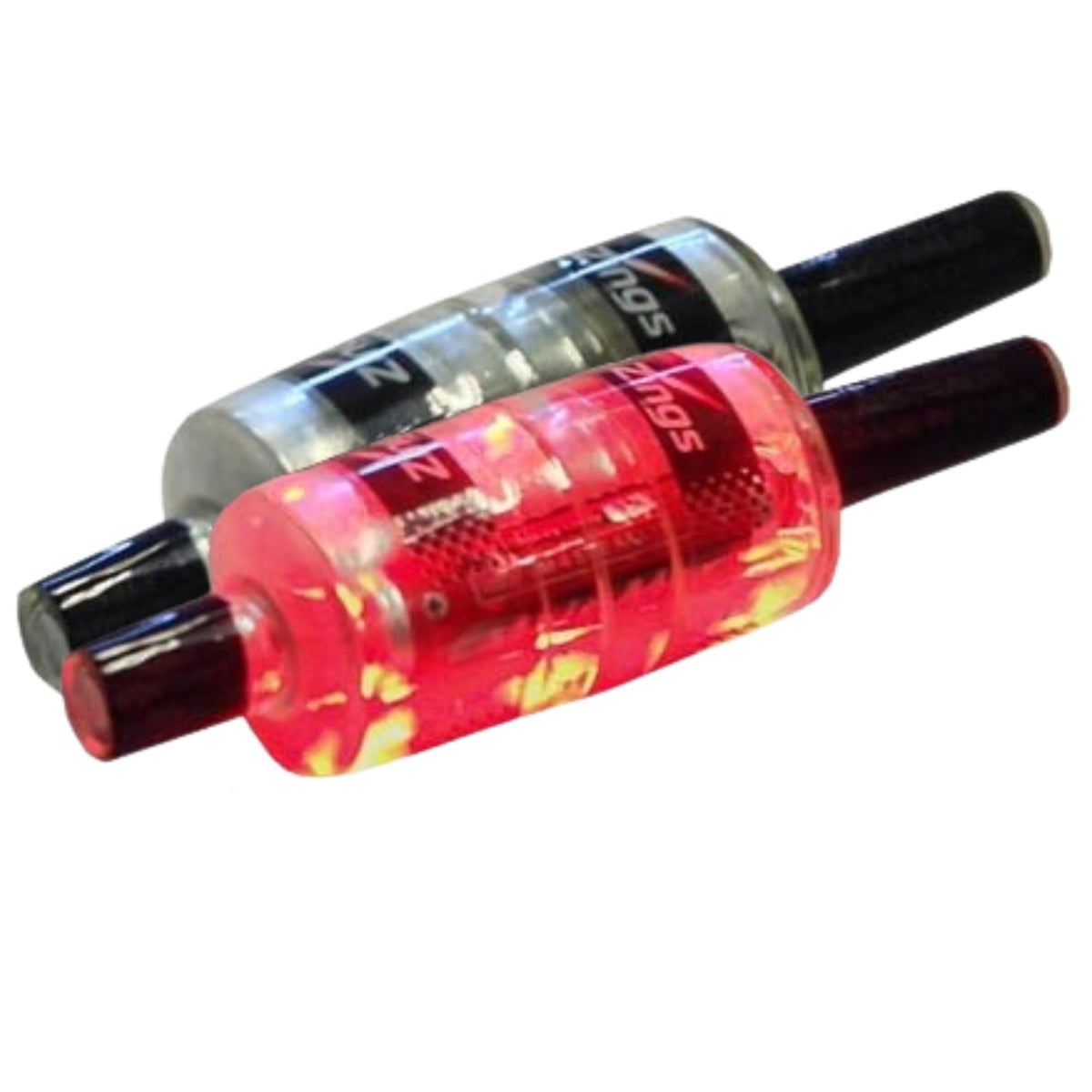
Zee Sports Stumps Flexible Rubber Stumps With Heavy Base
Stumps with a weighted base for practice.
View productFun facts about stumps
- The word "stumps" is also used to mean the end of a day's play, when umpires remove the bails.
- Umpires may agree to play without bails in high wind (Law 8.5).
- Law 8.3 allows bail-tethering devices that limit how far bails fly, if approved, for player safety.
Stumps vs wicket vs pitch
These words are often confused. The stumps are the three upright posts. The wicket is the full set of three stumps and two bails (the word also refers to a dismissal, and informally to the pitch). The pitch is the strip of ground between the two wickets. Knowing these terms makes the Laws much easier to follow.
Setting up a backyard pitch
For informal play, measure out a shorter pitch to suit the players and space, place a set of stumps at one end and a marker or second set at the other, and agree on boundaries. Spring or rubber stumps work well on hard ground where wooden stumps cannot be pushed in. Use a tennis or soft ball for safety in confined spaces.
Quick reference: key cricket measurements
| Item | Measurement | Law |
|---|---|---|
| Pitch length | 22 yards (20.12 m) | 6.1 |
| Pitch width | 10 ft (3.05 m) | 6.1 |
| Stump height | 28 in (71.12 cm) | 8.2 |
| Wicket width | 9 in (22.86 cm) | 8.1 |
| Popping crease from bowling crease | 4 ft (1.22 m) | 7.3 |
| Bowling crease length | 8 ft 8 in (2.64 m) | 7.2 |
| Max bat length | 38 in (96.52 cm) | 5.7 |
| Max blade width | 4.25 in (10.8 cm) | 5.7 |
These figures come from the MCC Laws of Cricket. Junior and informal cricket often use reduced dimensions set by the governing body or league.
Bat size limits
Law 5 also limits bat size: no longer than 38 in overall, with the blade no wider than 4.25 in, no deeper than 2.64 in, and edges no thicker than 1.56 in. Match bats must comply. See our bat size chart for choosing the right size within those limits.
Quick answers on stumps
Why are there two bails?
Two bails sit across the three stumps; dislodging a bail breaks the wicket.
What are stumps made of?
Match stumps are traditionally wood; practice stumps may be plastic, rubber or spring-loaded.
Measuring tips
When marking a pitch, use a long tape and measure from the centre of each middle stump. Check that both sets of stumps are upright and in line, and mark creases with paint or chalk where allowed. On artificial pitches, creases are often pre-marked; still check stump positions before play.
Bails in detail
Law 8.3 specifies bails of 4.31 in overall length, with a barrel and two spigots that sit in grooves on top of the stumps. The bails must not project more than 0.5 in above the stumps.
Frequently asked questions
How tall are cricket stumps?
28 inches (71.12 cm) above the ground for senior cricket.
How wide is a cricket wicket?
9 inches (22.86 cm).
What size are junior stumps?
Junior stump and bail dimensions are set by each country's governing body under Law 8.4, so check your league's playing conditions.
What is the distance between the stumps?
22 yards (20.12 m).
What sits on top of the stumps?
Two bails.
Set up your practice properly.
Shop practice gear
Leave a comment
This site is protected by hCaptcha and the hCaptcha Privacy Policy and Terms of Service apply.